Why tarmac fades to grey — and what actually brings the black back
7 min read Tarmac Revive
Grey, tired tarmac is not dirt and it is not worn-out stone. It is the bitumen binder oxidising, and understanding that tells you whether you need a clean, a restorative treatment, or a new surface.
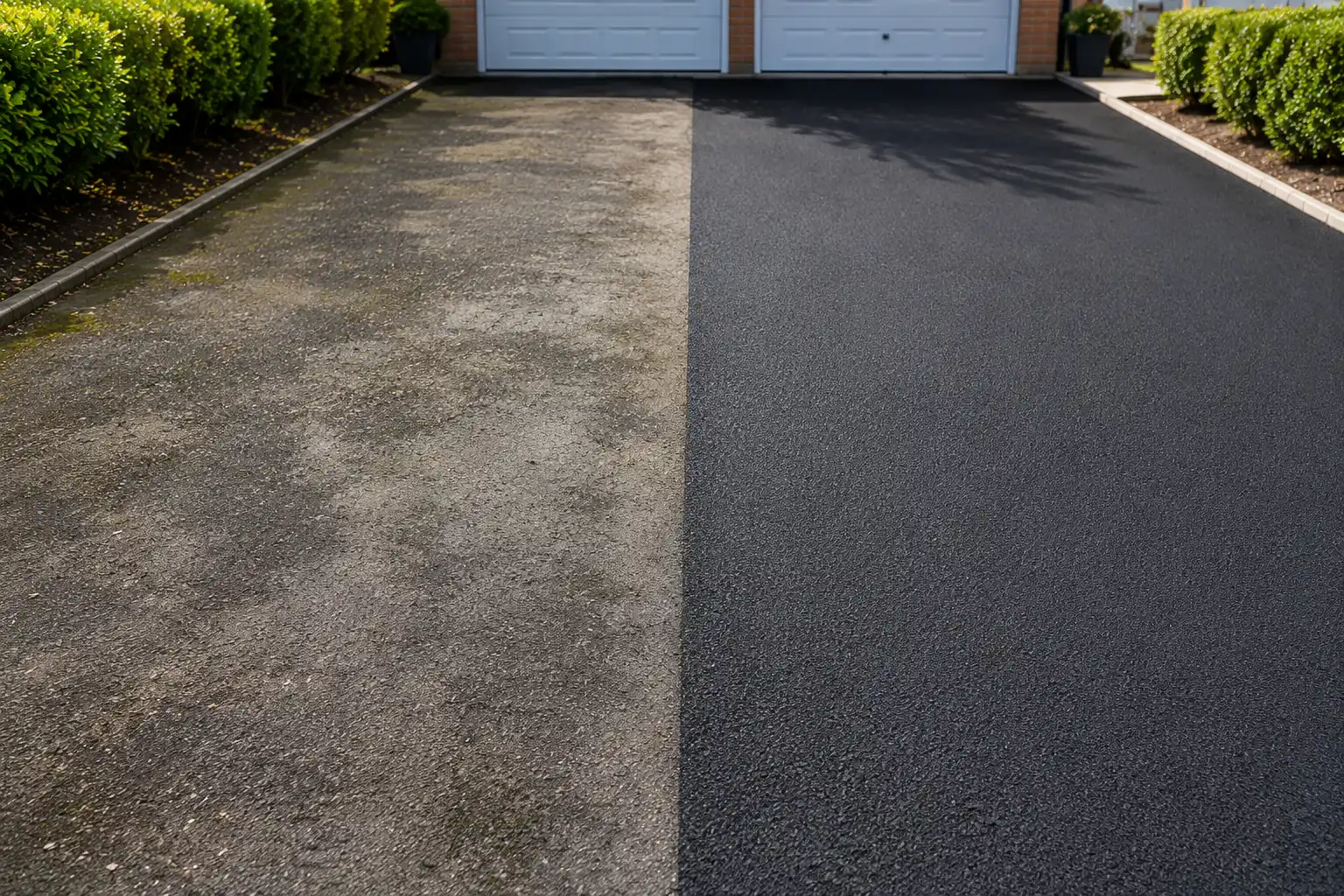
New tarmac is deep black. A few years on it is charcoal, then mid-grey, and eventually it looks pale and slightly coarse. Owners often assume it needs replacing. In most cases it does not, but what it does need depends on how far the process has gone.
What tarmac is made of
Tarmac — properly asphalt concrete — is crushed stone aggregate held together by bitumen, a black, sticky binder. The stone provides the strength; the bitumen provides the black colour, the flexibility and the waterproofing. Everything about how tarmac ages comes back to what happens to that binder.
Oxidation: the actual cause
Bitumen reacts with oxygen and ultraviolet light. As it oxidises it loses its lighter fractions, becoming harder, more brittle, and progressively less black. The grey you can see is partly the oxidised binder itself and partly the pale aggregate showing through as the binder thins on the surface.
This is not a defect. It happens to every bitumen surface everywhere, and it starts on day one. What varies is the pace: full sun accelerates it, standing water accelerates it, and fuel or oil spills dissolve the binder outright.
Why the colour matters beyond looks
This is the part worth understanding. Fading is a visible indicator of a physical change. As the binder embrittles, it stops flexing with temperature and traffic. Brittle binder cracks; cracks let water into the base; water plus freeze-thaw breaks the surface up. The progression is predictable:
- Colour fades from black to grey.
- The surface becomes visibly coarse as binder thins around the stone.
- Loose chippings appear, particularly at edges.
- Fine hairline cracking develops, sometimes in an interlinked pattern.
- Water enters, and potholes and edge break-up follow.
Treatment at stages one to three is straightforward maintenance. By stage five you are into repair or resurfacing. That is why acting on colour is not vanity.
Working out where you are
- Grey but smooth and sound — surface-level oxidation. A clean and a restorative treatment will do it.
- Grey and coarse, some loose chippings — binder loss at the surface. Still very treatable, but do not leave it another few winters.
- Hairline or interlinked cracking — the binder has embrittled. Sealing now prevents water ingress; leaving it does not.
- Potholes, crumbling edges, soft or springy patches — the base is involved. This needs repair before any surface treatment, and a treatment alone would be a waste of money.
What restores it
Cleaning
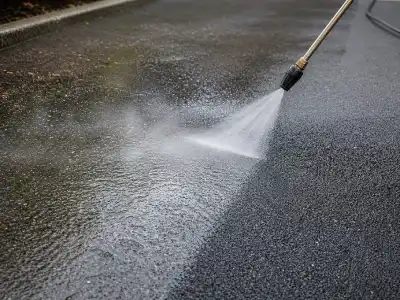
Removes moss, algae and general grime. On a surface that is dirty rather than oxidised this alone makes a large difference — but done at excessive pressure it strips binder and dislodges chippings, so pressure has to be matched to the surface. This is the most common way we see tarmac damaged.
Restorative sealing
A bitumen-based treatment applied over a cleaned surface. It replenishes binder at the top, restores a deep black finish, seals fine cracks against water, and slows further oxidation. On a sound but tired drive it is transformative and it is genuinely protective rather than cosmetic.
Resin or MMA coating systems
For commercial surfaces, or where a colour other than black is wanted, coating systems give a harder-wearing and more chemical-resistant finish. More expensive, longer-lasting, and useful for parking areas, access roads and line-marked surfaces.
Overlay or resurfacing
Where the surface course has genuinely failed but the base is sound, a new wearing course can go over the top. Where the base has failed, it needs excavating and rebuilding. No sealer substitutes for either.
Slowing it down
- Keep drainage clear so water is not standing on the surface.
- Deal with oil and fuel spills promptly — they dissolve bitumen.
- Avoid turning wheels while stationary, which scuffs the surface layer.
- Clear moss and leaves rather than letting them hold moisture in place.
- Seal on a sensible cycle rather than waiting for cracks.
A drive that is grey but sound is at the cheapest point in its life to look after. The same drive three or four winters later, with water into the base, is a different conversation entirely.
Common questions
- Can faded tarmac be made black again?
- Yes. A restorative bitumen-based sealer replenishes binder at the surface and returns a deep black finish, provided the surface is structurally sound.
- Is grey tarmac a sign it needs replacing?
- Usually not. Grey means the binder has oxidised at the surface. Replacement is only needed once cracking, potholes or a failing base are present.
- Does jet washing damage tarmac?
- At excessive pressure, yes. It strips bitumen and dislodges chippings. Cleaning must be done at a pressure matched to the surface.